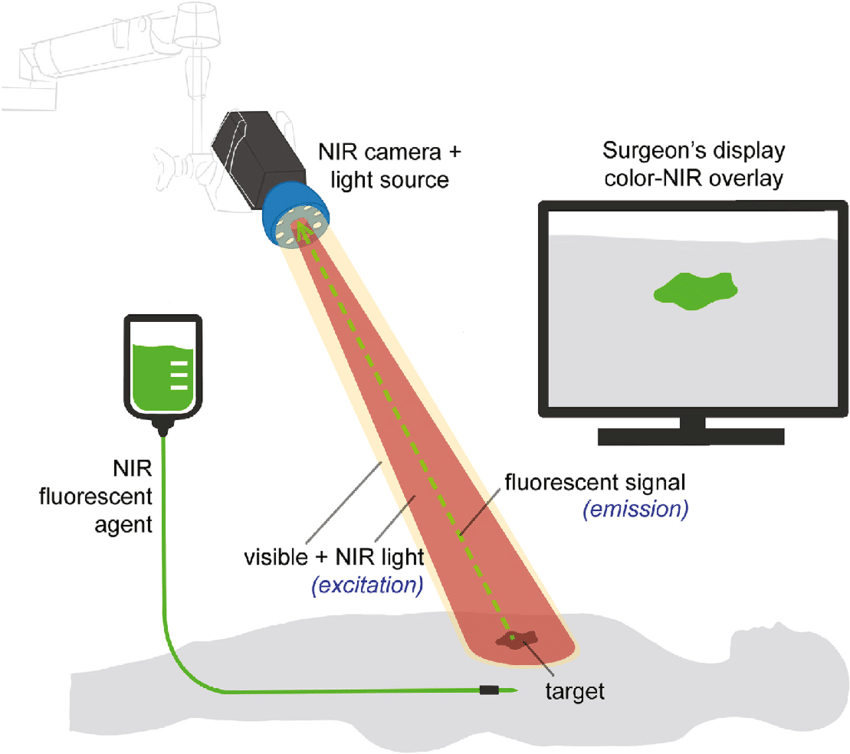
In fluorescence imaging, signal intensity is dependent on many factors. Besides tissue specific characteristics and pathology, imaging parameters play a significant role.
These include: distance, viewing angle, ambient light, dye emission spectrum, camera system sensitivity, attached optics (i.e. scope), system settings, exposure time, digital gain.
Concentration Standards (Product Description)
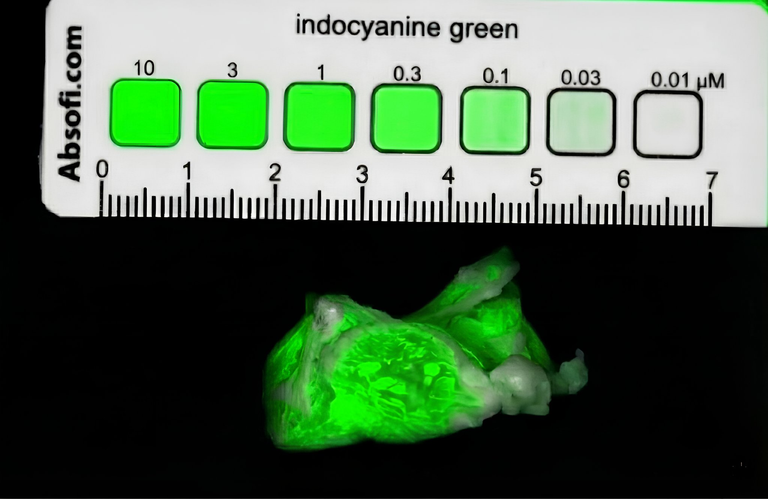
By imaging tissue samples with a fixed standard (i.e. Absofi reference card), fluorescent images are calibrated according to a standardised benchmark, creating a true reference factor. In essence, it’s like imaging a centimeter scale!
Our standard ICG cards are offered in packs of 10. The reference points have been set a log steps to represent the entire bandwidth of clinically relevant values.
Concentration mapping
The Absofi Image Viewer operates as a calibration tool for fluorescence imaging, specifically for ICG (Indocyanine Green).
Here is a concise description of how it works in conjunction with the reference cards:
The online web application, Absofi Image Viewer, allows users to upload tissue images captured during fluorescence-guided surgery. In conjunction with the reference cards—which feature a log concentration scale from 0.03 to 10 micro molar—the software performs the following steps:
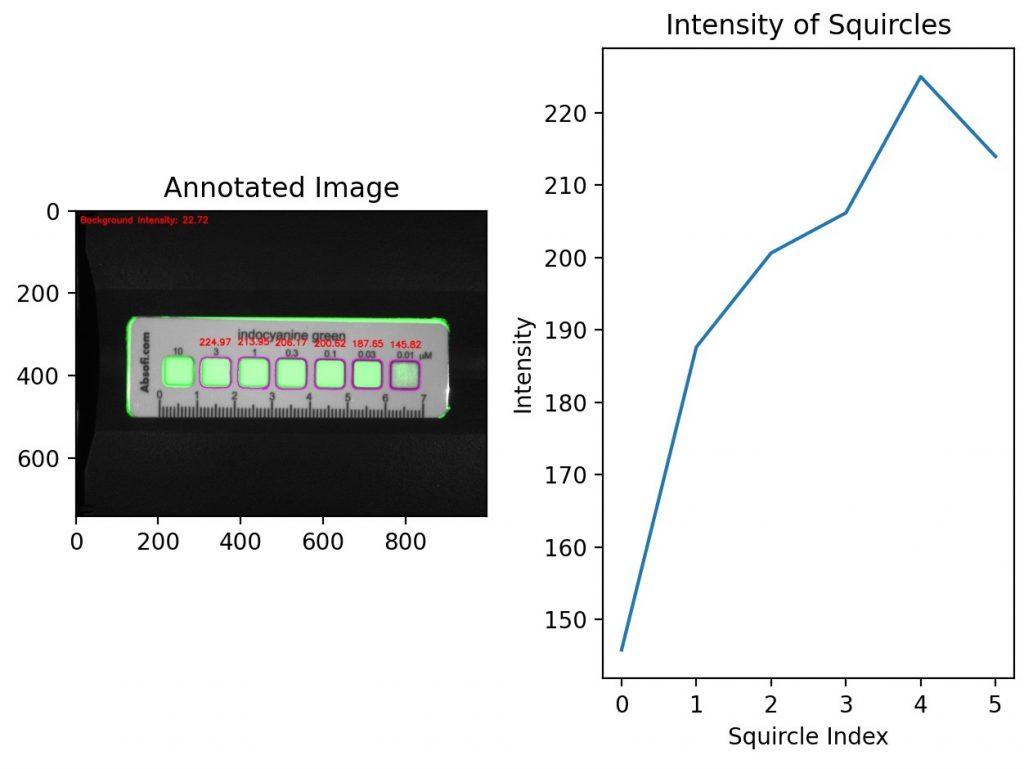
Recognition and Calibration: The software automatically recognises the reference charts within the image and uses the known concentration values to fit a calibration curve.
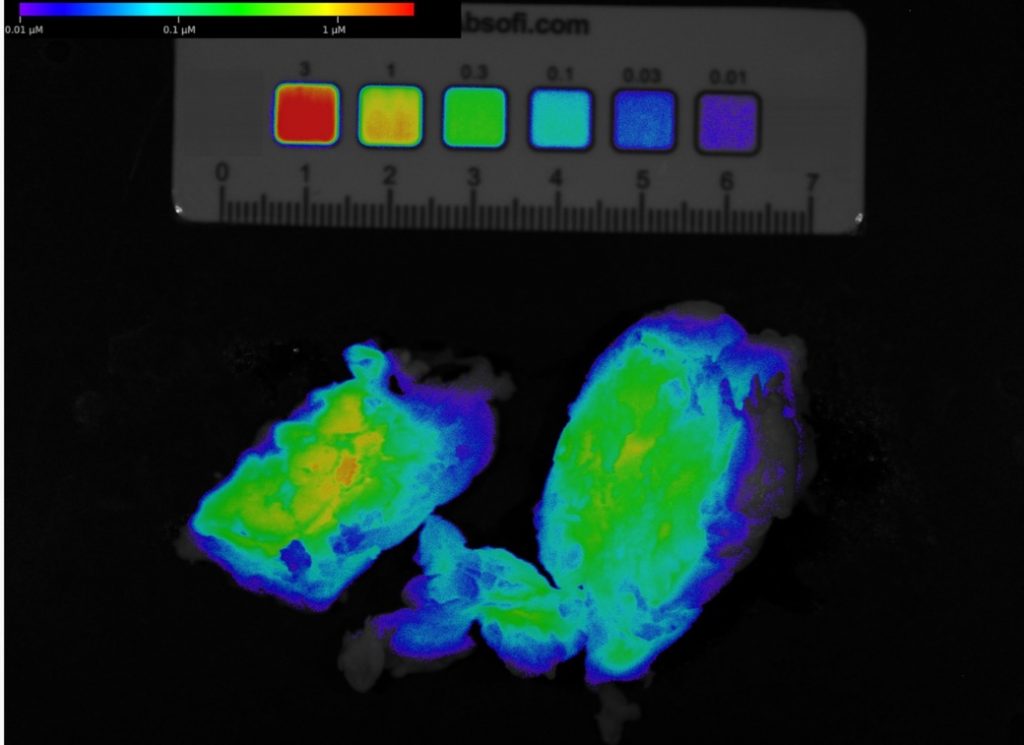
Quantification: Based on this curve, tissue samples are then annotated with corresponding concentration values, effectively quantifying the ICG fluorescence signal.
Visualization and Control: The portal provides several post-processing tools, including sliders that allow for thresholding, contour detection, and colour mapping of the quantified values.
Compatibility and Export: The system is camera agnostic, accepting all images, and allows users to export the processed results to standard formats (i.e., JPEG).